« prev · contents · next » · view entire story
006 / Stars
What is a Formic?
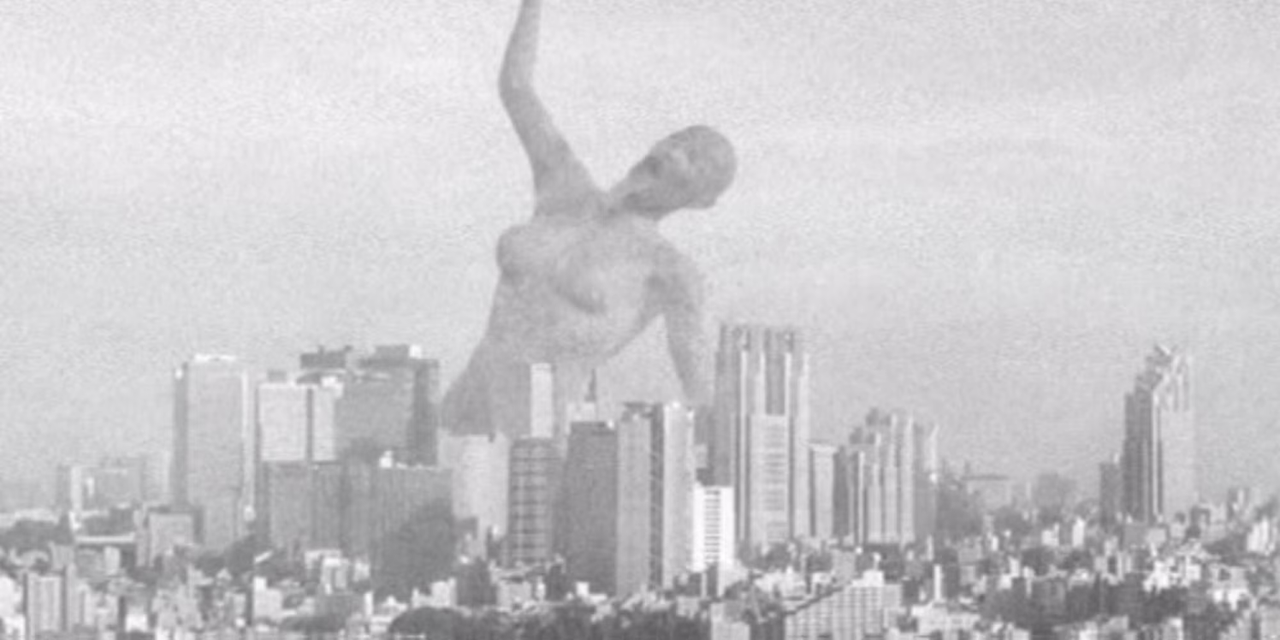
The proper 'first' of the Formics was dubbed 'Eve.' A malaised white thing with its face stretched out in a grimace, it had been present on the Earth—as an undecomposing corpse.
Not undecomposing as in it was inviolable, mind you—reverse rotting, as in its decomposition flowed backwards through time.
It appeared not to have any true skeleton, organs, or internal separation at first. As it undecomposed, this was proven to be false—an internal form emerged unbidden from the solid substance in time.
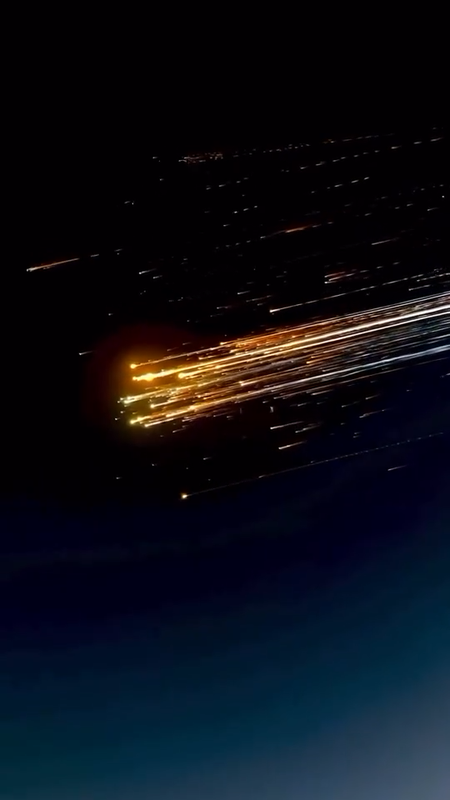
In 2014, Eve disappeared into the sky in a phenomenon now known as reverse starfall. (It appeared as if stars were falling in reverse onto the Earth—for those of you who don't know what a 'star' is, imagine one of the motes of light during a reverse starfall. My point was, at the time it was quite logical for that name to stick.)
Two years later, in 2016, 'Adam' appeared.
His black body absorbed all light; where Eve appeared as a hairless, naked human woman, Adam was male.
He rose up from the deepest depths of the sea one day. His rampage was in inverse; he reacted to things before they happened—based on the aftereffects of what happened around him.
He wandered the globe for 32 hours, targeting and destroying every major city in his path, before undergoing reverse starfall.
The Formics were not seen again for years afterward.
Four years after the US Department of Death Prevention created the first primitive Gestalts in 2122, the third Formic wave hit Earth.
'Formica,' in Latin, means 'ant.' Formics were called after this word for two reasons:
- When they appeared here, their behavior resembled that of ants.
- The compound created from the exposed edges of their internal dimension, on death, resembled ant venom, though its coloration ranged from red to jet black.
Rather than one large Formic, like the previous two, this wave was composed of numerous small ones (between one and ten meters in height), which tore their way out of the sea, ground, and in the case of the small ones—animals.
Humanity knew that it was necessary to meet Formics in a place that didn't put them at a disadvantage. The Department of Defense, therefore, created the first Pyrethroids.
The purpose of Pyrethroids was not to simply kill Formics. Not solely that, at least.
They were built to meet them. To match a Formic's inverted timeline with humanity's own. A Pyrethroid operates on the same battlefield the Formics do—not the battlefield of geography, but of sequence.
In their native configuration, a Pyrethroid acts as any heavy mech might.
The fight ends where it begins in Timestream A, the forward-facing timeline. The Timestream A Pyrethroid(s) receive the echo of the battle first—appearing as if the enemy emerges from its own corpse, the end already visible. Additionally, an inverted Pyrethroid is visible.
But once spooled, at the 'end' of combat in Timestream A (ie, when the Formic undergoes reverse starfall or 'escapes'—in reality pursuing backwards)—it joins the Formic in the inverted timestream, Timestream B. In Timestream A, the Pyrethroid appears to disappear the moment it merges with the reversed Pyrethroid—it has entered Timestream B.
From that point onward, the reversed Pyrethroid fights the battle normally.
Since the reversed Pyrethroid has to return to Timestream A at the beginning of the fight, this has the effect of (briefly) creating two extra Pyrethroids across the course of the fight. An extra one in Timestream A (the 'end' result Pyrethroid, having fought 1x in Timestream A already, and 1x in Timestream B), and the single Timestream B Pyrethroid.
However, once all spooling is completed, only one Pyrethroid is left over, at the beginning of the fight: the 'end' result Timestream A Pyrethroid.
If this all sounds complicated, don't worry. We'll get to hard examples in further lessons to aid your understanding.
comments